Science Behind the Stars

The Stars are backed by evidence-based nutrition science, and built for speed and practicality in the aisles.

Our Scientific Advisory Panel (SAP), an independent team of scientists and nutrition experts from leading institutions, monitors the current Dietary Guidelines for Americans, as well as the recommendations of leading national and international health organizations such as the U.S. Food and Drug Administration, U.S. Department of Agriculture, the National Academy of Sciences, and the World Health Organization. The SAP adjusts our algorithms as scientific consensus agrees on new reasons to promote, limit, or avoid certain nutrients or ingredients.

Our algorithms rigorously evaluate foods.

Specific nutrients and ingredients contribute to foods earning or losing points. Nutrients that are best to limit in our diets cause a food to lose points. Nutrients we should generally be eating more of cause a food to earn points. All foods are evaluated and earn a rating, but only those with a positive rating, containing more of the qualities we want to encourage, earn 1, 2, or 3 Guiding Stars.

More

Fiber
Live Active Cultures
Omega-3s
Vitamins & Minerals
Whole Grains

Less

Add Sodium
Added Sugar
Additives to Limit
Saturated Fat
Trans Fat

Our patented algorithms look at the balance of these points in a 100-calorie serving of the food. This allows us to rate foods against an objective standard. This standardization also allows the consumer to compare products side by side and adjusts for serving size variation of the same product due to food packaging, as well as water weight.

Guiding Stars recognizes no single algorithm can meet all needs.

In situations where the recommendations for a food or diet vary, so do our algorithms. Foods for babies and toddlers, for example, are rated with a separate algorithm, recognizing that the dietary recommendations are different for children under the age of two. Fats and oils also have a separate algorithm, as do meats and seafood, because foods in these categories contain a different balance of nutrients and need to be assessed accordingly. Finally, beverages have a unique algorithm to evaluate beverages based on a 12-ounce serving size since so many products in the category contain few or no calories.


Our science stays current.

Our patented algorithms are frequently reviewed by our Scientific Advisory Panel (SAP). When the scientific consensus around a specific nutrient or food group changes, the SAP revises our algorithms or develops new ones to make sure the Guiding Stars are always pointing to the most current understanding of good nutrition.

Transparency

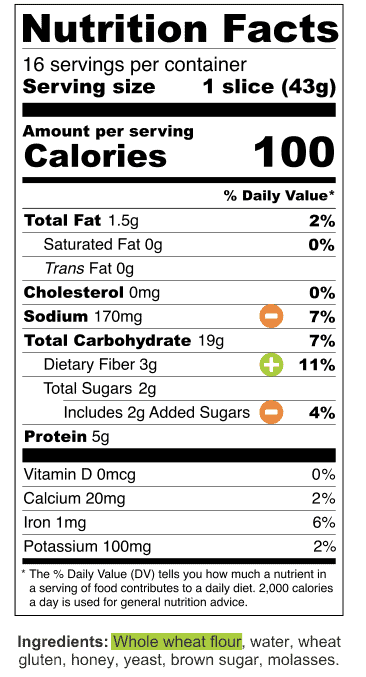
We use information that is available to consumers on nutrition labels, ingredient lists, and product packaging to evaluate foods. For single ingredient items, like fresh fruit and vegetables, we utilize the USDA’s National Nutrient Database. We have a comprehensive data process to ensure that we’re evaluating exactly what customers are being sold and can see on the product package.

Data Integrity

All data undergoes a thorough review process before going live in our system. Our data collection process is designed to guarantee consistency and accuracy of our nutrition data. Our review process ensures that each food is evaluated with the appropriate algorithm and results of the analysis are reflective of current policy and procedure. Products are activated in the system and available to clients only after the data integrity has been fully verified.